
 EN
EN
Architectural Evolution and Core Mechanics
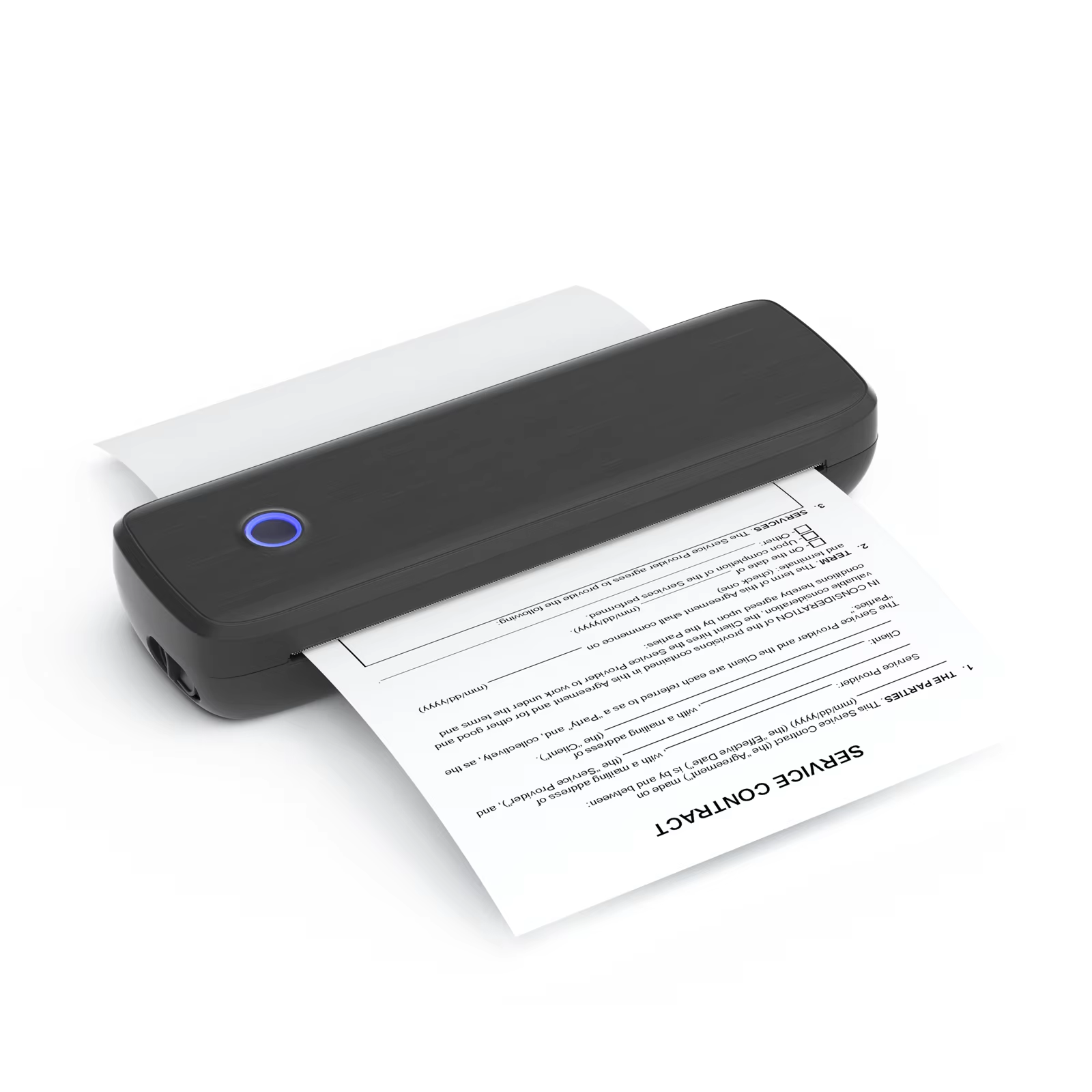
When setting up compact printing setups for retail checkouts, delivery vans, or field logistics, figuring out whether to go with a thermal mini printer or an old-school dot matrix system is a major decision. Traditional impact printers rely on tiny mechanical pins slamming against inked ribbons to leave a mark on paper. While that setup creates carbon copies, it also introduces plenty of moving parts, annoying mechanical noise, and constant maintenance headaches when ribbons wear thin or pins jam up. On the flip side, modern thermal printing shifts completely away from impact hardware. By using selective semiconductor heating elements that react with special thermal paper, these devices operate in near silence. Without complex moving parts to worry about, the overall build becomes remarkably durable and compact, fitting effortlessly into tight spaces where everyday reliability matters most.
Visual Clarity and Barcode Scannability
Getting receipts, shipping tags, and tracking labels that remain easy to read is essential for fast-moving environments. Older dot matrix machines often struggle with dot-aggregated text that tends to blur over time or fade out entirely as ribbons dry up. Industry evaluations consistently point out that a thermal mini printer delivers sharp, high-contrast characters along with crisp barcodes. Because the thermal transfer happens cleanly without liquid ink or ribbon smears, scannability stays exceptionally high even during peak business hours. This precision ensures that scanners at busy checkout counters or fast-paced sorting hubs capture codes instantly on the first try, significantly speeding up customer service and reducing operational bottlenecks.
Total Cost of Ownership and Upkeep Realities
Looking past the initial price tag reveals a much bigger picture regarding long-term operational expenses. Dot matrix setups require a steady stream of consumable purchases, including replacement ribbons, spools, and special multi-ply paper stock, alongside frequent service calls to fix jammed components. In contrast, shifting toward a thermal mini printer cuts down on ongoing supply costs because ink ribbons are completely removed from the equation. The only consumable required is thermal roll stock, which makes inventory management much simpler. Across various retail and courier networks, adopting thermal hardware drastically minimizes routine maintenance downtime. Fewer mechanical parts mean fewer points of failure, keeping daily business operations running smoothly without unexpected service interruptions.
Environmental Adaptability and Power Efficiency
Working environments can change dramatically, stretching from air-conditioned storefronts to dusty warehouses and outdoor delivery routes. Dot matrix hardware draws substantial electrical current to drive mechanical solenoids and motors, making them tough to run efficiently on battery-powered mobile terminals where conservation is key. Modern thermal mini printer models are built around intelligent power-saving chipsets that support ultra-low sleep states and efficient heating pulses. Furthermore, premium thermal units are engineered to handle wide temperature shifts and persistent vibrations without skipping a beat. Whether deployed in freezing cold-chain transit or a humid retail kiosk, solid-state thermal tech maintains consistent performance regardless of external conditions.
Manufacturing Strength and Brand Value
Choosing the right hardware partner ultimately comes down to dependable manufacturing expertise and stable supply chain execution. Lujiang operates with a strong focus on strict quality control, precise thermal head calibration, and scalable production lines designed to support diverse global requirements. By combining advanced surface-mount technology assembly with rigorous environmental testing—such as drop trials and thermal aging checks—Lujiang ensures that every thermal mini printer meets demanding commercial standards. For businesses looking to scale retail networks or upgrade mobile tracking fleets, collaborating with Lujiang provides robust manufacturing backing and dependable supply chain solutions built for long-term market success.